November 16, 2026
Understanding the Stages of a Customer Conversion Funnel
By @pipelinepaths
What Is a Customer Conversion Funnel?
A customer conversion funnel describes the path a person takes from first hearing about a business to becoming a paying customer. The funnel narrows at each stage because some people drop off along the way. Understanding how the funnel works helps businesses identify where they lose potential customers and what they can do to improve results.
Many people think of a funnel as a simple three-step process: awareness, consideration, and decision. In practice, the funnel has more nuance. Each stage requires different messaging, different tools, and a different approach to keep people moving forward. The goal is not just to generate leads but to guide them naturally toward a purchase.
The Main Stages of a Conversion Funnel
A typical funnel breaks down into four or five stages. The names vary depending on who you ask, but the underlying logic stays the same.
Awareness
Awareness is the top of the funnel. At this stage, a person realizes they have a need or a problem. They might search online, see an ad, or hear about a solution from someone they trust. The business's job is to appear in front of these people with clear, helpful information. A strong landing page or a well-targeted ad can make the difference between a glance and a click.
Interest
Once someone knows about a solution, they start evaluating it. They want to understand how it works, whether it fits their situation, and what others think. Content such as blog posts, comparison guides, and customer stories can help here. The key is to provide enough detail to answer questions without overwhelming the reader.
Consideration
In the consideration stage, a potential customer is comparing options. They may look at pricing, features, and reviews. This is where lead capture becomes important. Offering a free resource, a demo, or a consultation can encourage them to share their contact information. The business can then follow up with more tailored information.

Decision
The decision stage is where the customer chooses to buy or not. At this point, they have all the information they need. What often tips the balance is a clear call to action and a sense of trust. A simple checkout process, a money-back guarantee, or a direct phone number can reduce hesitation.
Post-Purchase
Some funnels include a post-purchase stage for retention and upsell. Satisfied customers can become repeat buyers or advocates. A thoughtful follow-up sequence and ongoing support help turn a one-time sale into a long-term relationship.
How Lead Qualification Fits In
Not every person who enters the funnel is ready to buy. Lead qualification helps businesses separate serious buyers from people who are just browsing. A common approach is to score leads based on their actions. Did they download a detailed guide? Did they visit the pricing page multiple times? Did they request a call? Each signal adds to their score. Once a lead reaches a certain threshold, the sales team knows to prioritize them.
Qualification also prevents wasted effort. A salesperson who spends time on a lead that never intended to buy is losing hours that could go toward a more promising contact. Automated workflows can handle the early stages of qualification, freeing up people for the conversations that matter.
Where Most Funnels Leak
Even a well-designed funnel can lose people at certain points. Common trouble spots include:
Web Rank Digital is also on Twitter.
- The landing page doesn't match the ad or the link text, so the visitor feels misled and leaves.
- The form asks for too much information too early. A person may not want to give their phone number before they know if the solution is right for them.
- The follow-up is too slow. A lead that contacts a business and hears back days later may have already moved on to a competitor.
- The call to action is weak or unclear. Without a confident request to take the next step, the visitor stalls.
- The content is too generic. A person who feels the material is not written for their situation will lose interest.
Identifying these leaks requires tracking. A business can use analytics to see where visitors drop off and then test changes to plug the holes.
The Role of Workflow Automation
Workflow automation ties the funnel stages together. When a lead takes an action, such as filling out a form or clicking a link, the system can automatically trigger a sequence. The sequence might send an email, assign a task to a salesperson, or update a CRM record. This ensures that no lead falls through the cracks because someone forgot to follow up.
Automation also helps with consistency. Every lead gets the same quality of experience, regardless of when they enter the funnel. A business that uses customer acquisition software can set up these sequences once and then let the system handle the repetitive work. That leaves the team free to focus on the human interactions that build trust.
For example, a person who downloads an ebook might receive a thank-you email immediately, followed by a case study a few days later, and then an invitation to schedule a call. Each message builds on the last, moving the person closer to a decision.
How to Improve Conversion Rates at Each Stage
Improving a conversion rate starts with understanding where the funnel is weakest. A few general strategies apply across most businesses.
Make the First Impression Count
The awareness stage is about clarity. If someone arrives on your site and cannot tell within a few seconds what you offer, they will leave. A headline that states the benefit and a short description that explains the solution can keep them reading. Avoid jargon and vague claims.
Reduce Friction in Forms
Forms are often a barrier. Asking for a name and email address is usually enough for an initial download. Save the detailed questions for when the lead is further along. Every extra field reduces the chance that someone will complete the form.
Use Targeted Follow-Ups
A generic follow-up email feels impersonal. Segment your leads based on what they showed interest in, and send content that matches. A person who looked at pricing wants different information than someone who read a beginner's guide.
Test Your Call to Action
The wording, color, and placement of a call to action can all affect click-through rates. A simple test might compare "Get Your Free Guide" versus "Download Now." Small changes can have a noticeable impact.
What This Means for a Business
Understanding the funnel gives a business a framework for making decisions. Instead of guessing why sales are flat, they can look at each stage and ask: Are we attracting the right people? Are we giving them the information they need? Are we asking them to take the next step at the right time?
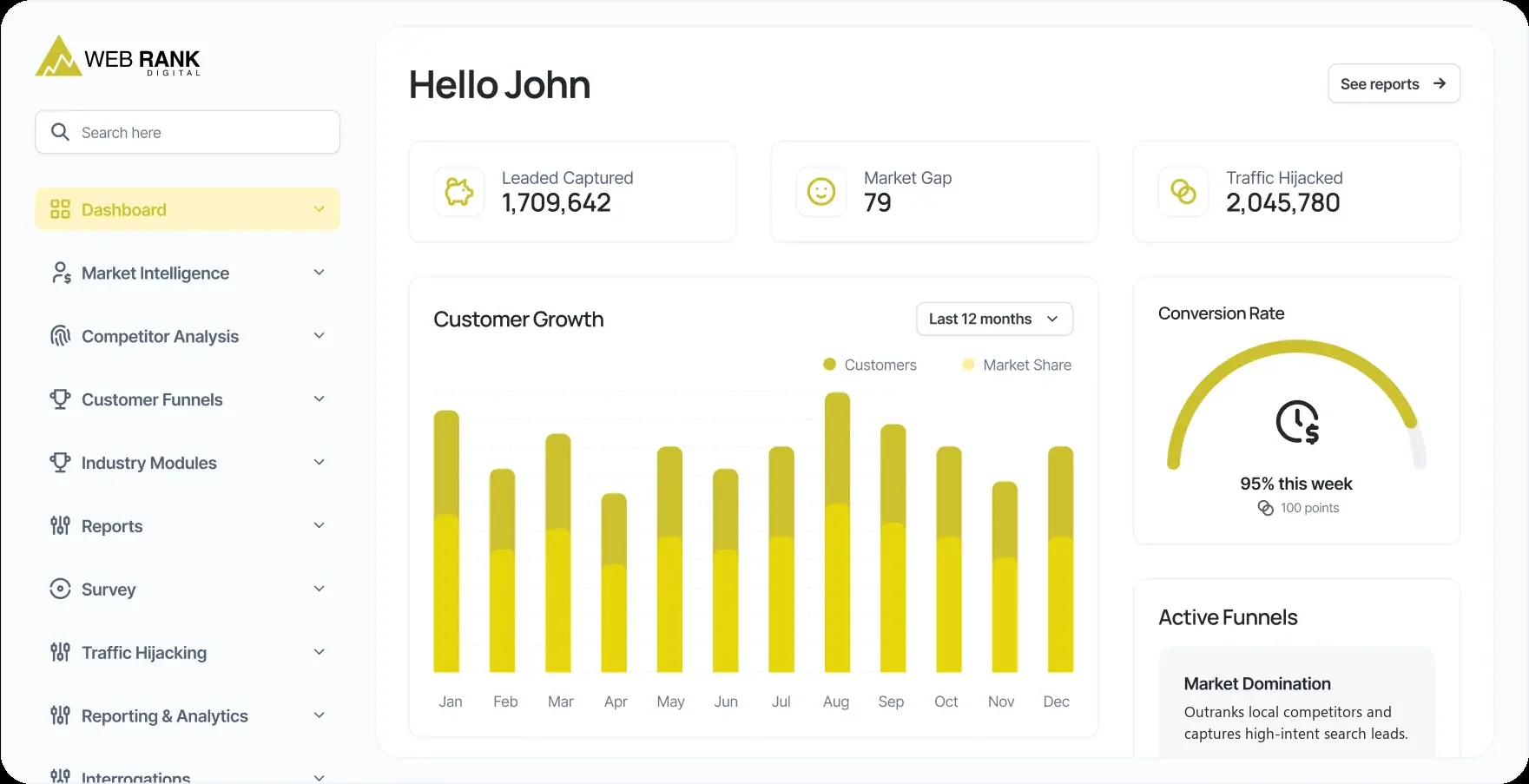
This is where customer acquisition software becomes useful. A platform that tracks the customer journey, automates follow-ups, and scores leads helps a business run a more efficient funnel. It turns guesswork into a repeatable process.
That said, no tool replaces the need for good judgment. The funnel is a guide, not a formula. A business that listens to its customers and adapts its approach will always have an advantage over one that rigidly follows a script.
Web Rank Digital, located at 401 s Graham st Charlotte NC 28202, can be reached at +1 877-726-5871 for those interested in learning more about their platform.
❧